Sri Lanka : National Human
Rights Action Plan
Role of Public in drafting
to safeguard and enhance human rights …
The
government of good governance has paid attention to various subjects such as
reconciliation constitutional reform and sustainable development. In this respects Sri Lanka is drafting its
National Action Plan to fulfill its duty and responsibility towards safe
guarding and enhancing the human rights in Sri Lanka during next 5 year tenure 2017-2021.
In
pursuance of this objective namely to draftee the national plan a Ministry
level team was appointed on 10th may 2016 through the Cabinet Order
paper number 116/0836/710/016 included in the team are the Ministry of Foreign
Affairs and the Ministry of justice apart from some other ministries.
A
guiding and drafting group comprising representative of Ministers and the
government, CSOs representatives to oversee the working of the National Action
Plan. It is important for the people too to extend their share though this
action plan in order to ensure the production and enhancement of the human
rights, started Mr. P.P. Sivapragasam, President of Human Development
Organization (HDO) who has been nominated to serve a number of the Steering
Committee. He farther stated that the
team calls upon the public to submit their observations and views on the subjects
that have to be considered in relation to the human rights enhancement. He also
started that it’s important for the people to draw their attention to the
following matters which have to be included in the National Action Plan. He emphasized the need for the contribution
from the minority communities in Sri Lanka.
The National Action Plan will cover
the following subjects.
A.
Civil and political
rights.
B. Economic, Social and cultural rights.
C.
Prevention of torture
D.
Women rights.
E.
Labor rights.
F.
Migrant workers’ rights.
G.
Children rights.
H.
Internally displaced
people rights.
I.
Differently abled people
rights.
J.
Environmental rights.
The
National action plan on human rights enhancement will be based on the flowing
leading principles.
·
Importance of the system.
·
Responsibility in
drafting the NAB to conform to the international human right standard.
·
Implementation of
international duties and responsibilities.
·
Integration and
indivisibility of human rights.
·
Ensuring the activities
conform to human rights in clear terms.
·
People participation.
·
Monitoring and
evaluation.
·
Continuity of the
process.
·
National responsibility.
·
International dynamics.
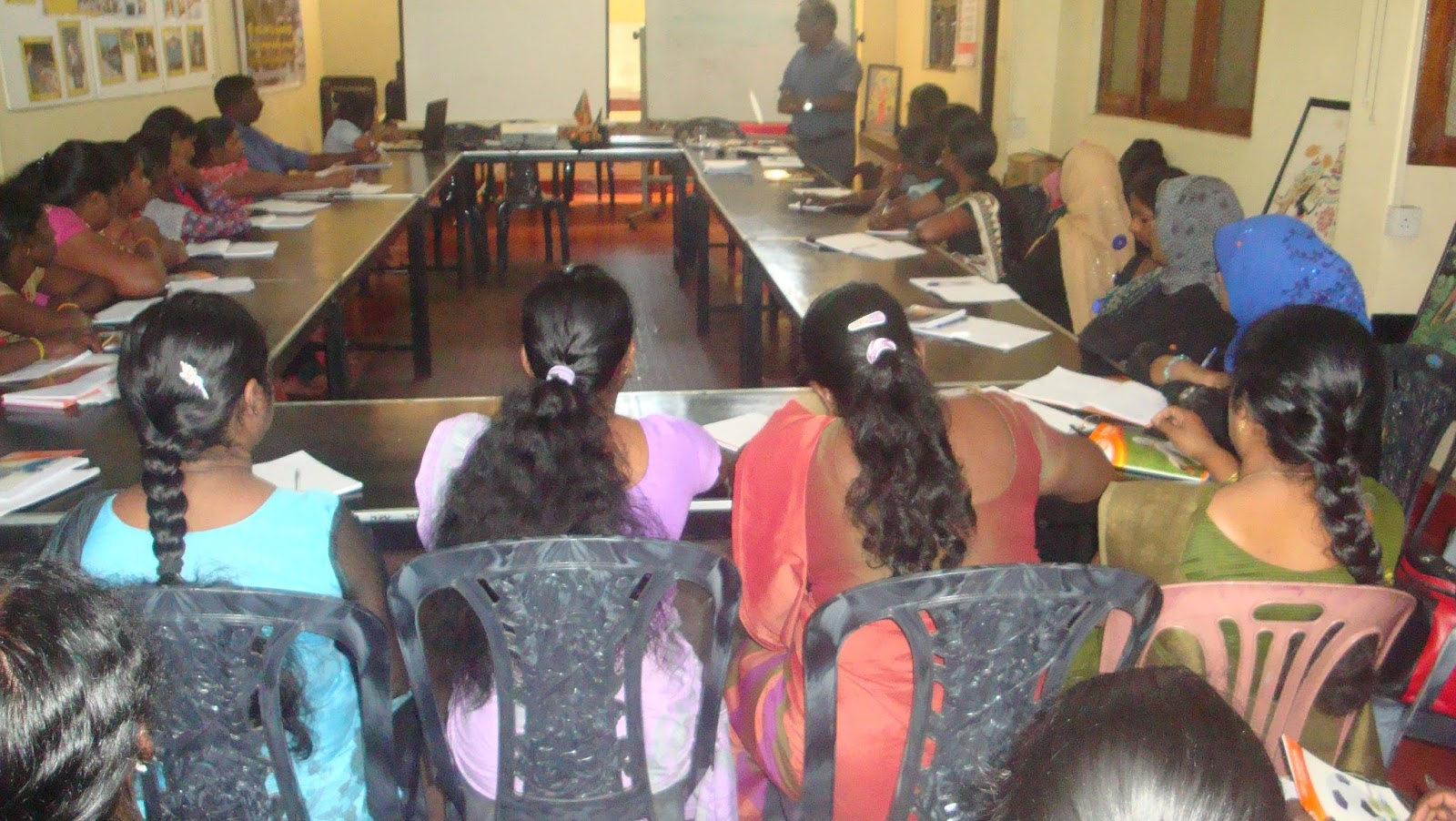
Mr.
P.P. Sivapragasam, of HDO who has been nominated member of the team stated that
individual members and civil organization willing to submit their reports, may
do so pointing out the objective, activity and the target period and indicate,
clearly and addressing same to the address as for law. The Human Development
Organization is in the process of organizing citizen participation in the
process of developing Action Plan.
(Article
published in National News Paper “Virakesari 25/9/2016 and Social Medias)


 The United Nations Special
Rapporteur on minority issues, Rita Izsák-Ndiaye, arrived in Sri Lanka on 10th
October, to assess the current situation of national or ethnic, religious and
linguistic minorities in the country. She also visited Human Development
Organization and the Plantations in Kandy areas to assess the real living and
working situation of the plantation people in Sri Lanka. Commencing her visit, Ms. Izsák-Ndiaye had a
constructive dialogue with Upcountry CSOs, academics, health professionals,
lawyers and workers. The dialogue was organized and chaired by Mr. P.P.
Sivapragasam, President of Human Development Organization in Kandy.
The United Nations Special
Rapporteur on minority issues, Rita Izsák-Ndiaye, arrived in Sri Lanka on 10th
October, to assess the current situation of national or ethnic, religious and
linguistic minorities in the country. She also visited Human Development
Organization and the Plantations in Kandy areas to assess the real living and
working situation of the plantation people in Sri Lanka. Commencing her visit, Ms. Izsák-Ndiaye had a
constructive dialogue with Upcountry CSOs, academics, health professionals,
lawyers and workers. The dialogue was organized and chaired by Mr. P.P.
Sivapragasam, President of Human Development Organization in Kandy. 


 Political
Representation: Pressure
and demand for the change of the present proportional representation system has
gathered momentum, since it is corruption ridden and a source of violence. At
the same time, the proportional representation system appears to be favorable
to demographic minorities and particularly the up country Tamils and Muslims.
Therefore civil organization opin that the parliamentary and political system
under the new constitution be an electoral representation system and the
proportional representation system combine. We believe this will enable not
only the up country Tamil people who live scattered but even the Sinhala and
Muslim people who live scattered in the Northern Province and rest of the
country to have their political rights ensured
Political
Representation: Pressure
and demand for the change of the present proportional representation system has
gathered momentum, since it is corruption ridden and a source of violence. At
the same time, the proportional representation system appears to be favorable
to demographic minorities and particularly the up country Tamils and Muslims.
Therefore civil organization opin that the parliamentary and political system
under the new constitution be an electoral representation system and the
proportional representation system combine. We believe this will enable not
only the up country Tamil people who live scattered but even the Sinhala and
Muslim people who live scattered in the Northern Province and rest of the
country to have their political rights ensured